Teddy Bear & Friends, Issue Feb. 1995
|
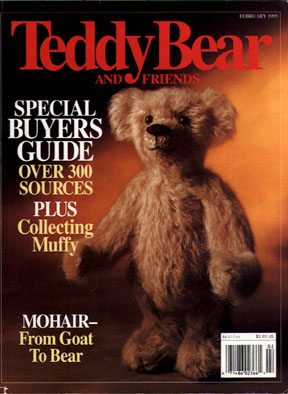
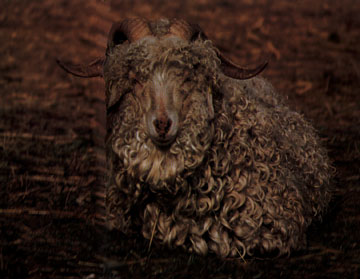
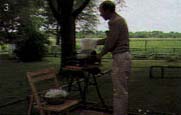
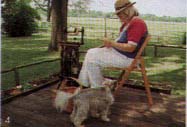
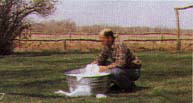
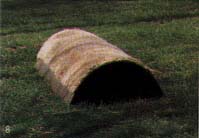
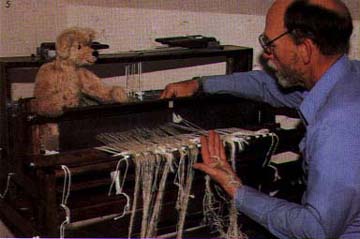
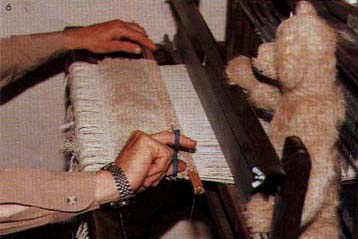
Mohair: It All Begins with a Goatby Joe & Monty SoursThe Purist's Version of an Artist Bear Begins with Handmade MohairThere is something magical about mohair. It is soft, luxurious, durable, and maintains its beauty for a long time. These are just some of the reasons that mohair is the fabric of choice for teddy bears. Mohair comes from the angora coat. Angora goats originated in the Angora region of Turkey (now Ankara), where their hair was woven into fine cloth that was both warm and durable. As time progressed, the hair was used for weaving the finest velvets for use in both clothing and upholstery. When the Steiff company began manufacturing teddy bears in 1903, Richard Steiff insisted that the new toy be made of mohair. Margarete objected due to the cost of the fabric, but Richard declared that only the finest material would be acceptable in the marketplace. Fortunately he held sway, making mohair teddy bears the choice of collectible we know today. During a discussion among several of our artist friends as to what makes an artist bear, someone said that there was no such thing as a true artist bear since no one makes their own fabric. We took that statement as a challenge and began our quest to create artist-made mohair plush fabric. The first and simplest method that came to mind was to use a tanned goat skin. This method met strenuous objections from the goat, who felt it had better use for its skin and just couldn't live without it. We consented to the goat's wishes and sought another method. Next, we considered tying mohair into the fabric backing. To us, this method had two major drawbacks: it had been done; and it relied on a manufacturer to do part of the work. We decided that the only way to accomplish our goal was to begin with the goat (wearing its skin) and create plush fabric completely from scratch. Fortunately, we live on a farm and our sister-in-law, who lives on an adjacent farm happens to raise angora goats. Spinning the yarn was the most important and time-consuming part of the process. The quality of the finished fabric is only as good as the yarn. we spun the yarn using the worsted method, which keeps the hair as straight as possible, with very little elasticity. We also spun it as thin as possible to keep the final fabric from being bulky and coarse. We discovered that to make a 12-inch bear requires approximately three fourth of a mile of yarn. In normal flat weaving this amount of yarn makes sufficient fabric for a three-piece suit. After the yarn was spun and plied, we began weaving. As no commercial loom was available to weave plush fabric, we modified a loom to accomplish the task. we added two more harnesses and a second back beam with a tension brake. this was necessary since two weaving processes take place at the same time that the plush is woven into the backing. The plush is woven in yarn loops which are later cut to make a fabric similar to string mohair. Once the fabric was woven, we washed it to remove the twist from the plush. then we carded it it remove the remaining twist, and the plush returned to hair. We chose to dye our fabric using a natural combination of walnut hulls and oak bark. The walnut hulls created a pleasing tan color which was intensified by the tannin in the oak bark. Our fabric was now ready for final processing. We washed it one last time to remove excess dye and pieces of hull and bark. Next, we carded the fabric to orient the nap, the laid it on a flat surface to dry. while it was still damp, we teased the fabric to give texture to the final product. When it was thoroughly dry, our fabric was ready for transformation into a true artist teddy bear. This article has be reproduced with the permission of Teddy Bears & Friends, all other use in prohibitied.
|
Ordering Information/ Horace Eugene/ Product Showcase/
Feature Magazine Articles/ Shows & Retailers/ Golden Teddy Awards & Toby Nominees/ / Homepage